

What each of these can answer
The three pages are not interchangeable. Each was built to answer one question, and each carries a limit that decides when quoting it would be wrong.
| Question | Page | What it cannot say |
|---|---|---|
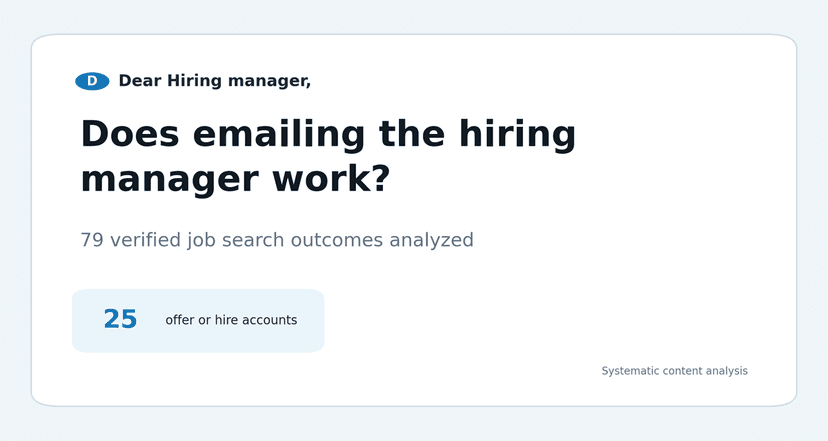
| What happens after someone contacts a hiring manager directly? | Does Emailing the Hiring Manager Work? 79 Outcomes Analyzed | Not an effectiveness rate. The accounts are selected public stories, not a random sample of messages sent, so the outcome counts describe who wrote something down. |
| Where do the job postings people actually chase come from? | The Outreach Index: Where Job Seekers Actually Find Jobs | Describes people motivated enough to look up a hiring manager, not job seekers in general, and three months is enough to state a shape rather than a trend. |
| What are the base rates for replies, ATS screening and ghosting? | Job Search Statistics 2026: Response Rates, ATS, Ghosting | Everything on it is somebody else's research. Survey figures measure recall and platform data describes that platform's customers. |
How we publish a number
Four rules, applied to every figure on this site. They exist because the job search corner of the internet is full of statistics with no denominator, no date and no study behind them — the “250 résumés per opening” figure being the one everybody still quotes.
- The denominator is visible. A count is published with what it was counted out of, in the same sentence.
- Selected stories stay counts. Anecdotes collected because they were detailed enough to code are never converted into percentages, because a share reads as a success rate that the collection method cannot support.
- The method and the biases are on the page. Not in a footnote, and including the parts that weaken the conclusion.
- Outside figures name their source and the date checked. Primary document over a summary of it, and a content farm quoting a survey is not a source.
Using and citing this data
Free to quote and republish with a link to the page the number came from. Both of our own datasets are downloadable, and each page carries a ready-made citation block with its snapshot date. If a figure here is wrong or has gone stale, write to team@dearhiringmanager.io and it gets corrected with the date of the change.
What to do with all of it
The numbers point one way: portal volume rose, reply rates did not, and the step that reliably changes whether a human looks at an application is reaching the person who owns the role. The job search guides cover how to do that — finding the person, writing the message, and what to do when nothing comes back. If you have a posting open right now, paste the URL and get the likely hiring manager for that role with a verified email.